By David Daranijo | Contributing Analyst
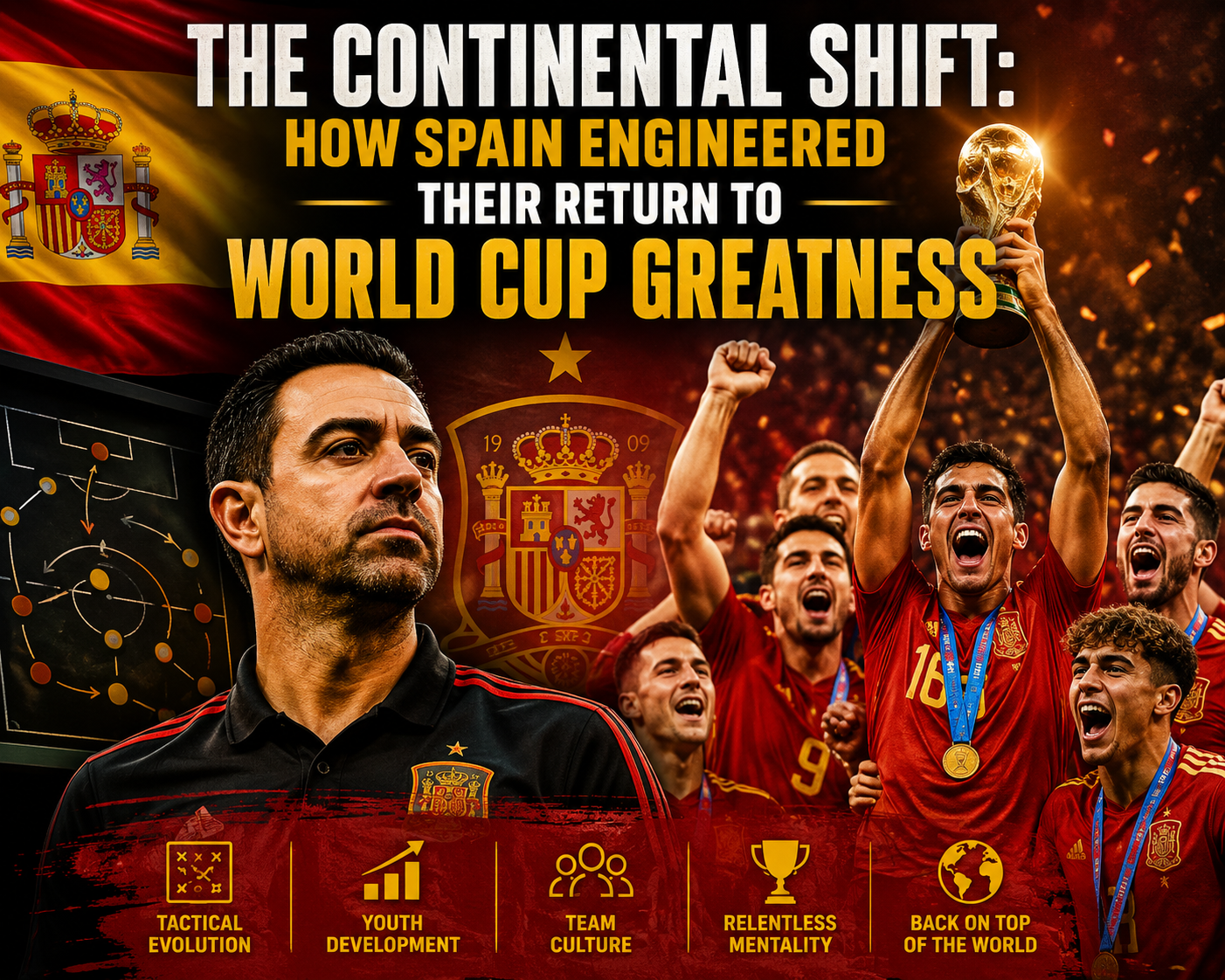
Spain’s journey to the 2026 FIFA World Cup final has been a story of reinvention — a deliberate, methodical shift that has taken them from a team weighed down by nostalgia to one operating at the cutting edge of modern football. On July 19, at MetLife Stadium in New York/New Jersey, La Roja will stand on the sport’s biggest stage once again, facing Argentina in a final that feels like a clash between eras.
This Spanish side is not a tribute act to 2010. It is a new organism entirely — faster, sharper, more vertical, and built with a clarity of purpose that reflects the vision of head coach Luis de la Fuente.
A Tactical Evolution Four Years in the Making
When de la Fuente took charge, he inherited a team with technical brilliance but tactical predictability. Spain’s possession‑heavy identity had become a burden, often lacking penetration and failing to adapt to the athleticism of modern opponents.
The transformation has been striking.
Spain now plays with vertical aggression, using quick switches, dynamic wing play, and intelligent counter‑pressing to destabilize opponents. Their semi‑final victory over France was the perfect illustration: long spells of controlled possession punctuated by explosive transitions that left France scrambling.
De la Fuente summarized his philosophy after the match:
“We built an idea and stayed loyal to it. Efficiency is our foundation.”
Youthful Fearlessness Meets Veteran Control
The balance within Spain’s squad has been one of their greatest strengths.
At just 19, Lamine Yamal has become the face of Spain’s new era. His ability to stretch defenses, isolate full‑backs, and create space for Spain’s midfield creators has been invaluable. His semi‑final goal — struck with the confidence of a player twice his age — cemented his status as one of the tournament’s defining talents.
Behind him, Rodri has been the stabilizing force. Fresh off a Ballon d’Or win, he has dictated Spain’s tempo with unmatched composure, helping the team concede only one goal in seven matches — the best defensive record of the tournament.
The supporting cast has risen to the moment:
Pau Cubarsí, the emerging defensive anchor
Aymeric Laporte, offering experience and positional intelligence
Pedro Porro, whose attacking surges from right‑back produced a crucial quarter‑final winner
And leading the scoring charts for Spain, Mikel Oyarzabal has delivered five goals, proving himself indispensable in the final third.
A Road Marked by Discipline and Response
Spain’s campaign began with frustration — a goalless draw against Cape Verde despite 27 attempts on goal. Instead of derailing their momentum, it sharpened their focus.
From that point, Spain’s progression was clinical:
Round of 32: 3–0 vs Austria
Round of 16: 3–1 vs Portugal
Quarter‑final: 2–1 vs Belgium
Semi‑final: 2–0 vs France
As Dani Olmo reflected,
“We started in Atlanta, and now we finish in New York. It feels written.”
The Final Test: Argentina and the Messi Factor
Spain enters the final with tactical clarity and defensive steel, but Argentina presents a unique challenge. Their midfield can be exploited, yet their attacking unit — still led by the legendary Lionel Messi — remains one of the most cohesive in world football.
Spain’s ability to control transitions, maintain defensive discipline, and capitalize on wide‑area superiority will determine whether this new era ends with a second World Cup trophy.
Conclusion: A New Identity, A New Legacy
Spain arrives at MetLife Stadium not as a team chasing the ghosts of past glory, but as a fully realized modern contender. De la Fuente’s project has fused Spanish artistry with physicality, intelligence, and tactical evolution.
This is Spain reborn — and they stand one match away from redefining their place in football history.