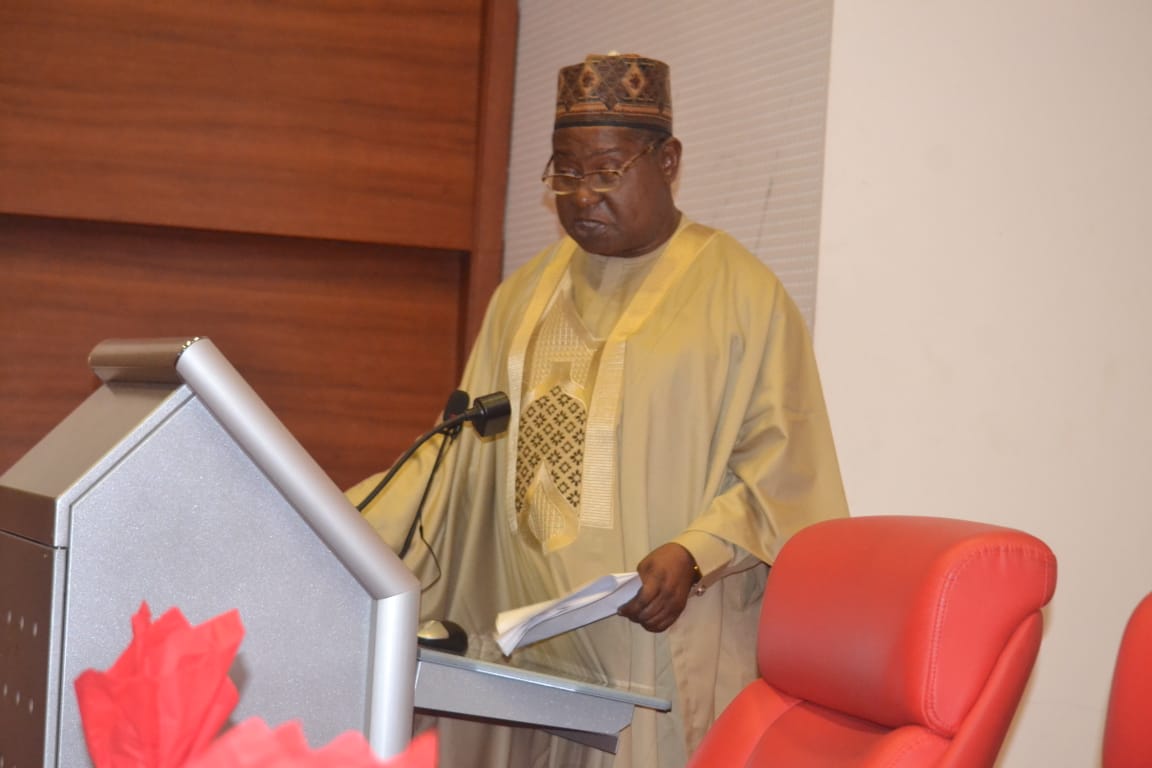
The Pharmaceutical Society of Nigeria (PSN) has called on the National Assembly to strengthen Nigeria’s pharmaceutical regulatory framework, warning that poorly structured reforms to the Pharmacy Council of Nigeria (PCN) could undermine professional oversight, while weak enforcement against counterfeit medicines continues to pose risks to public health.
The society is urging lawmakers to reconsider the proposed reduction in the membership of the PCN Governing Council and adopt tougher penalties for counterfeit drug offences, including fines of up to N125 million, imprisonment of up to 20 years and forfeiture of assets linked to convicted offenders.
The recommendations, contained in the PSN’s submissions on two legislative proposals before the National Assembly, highlight the need to balance administrative efficiency with professional expertise, regulatory independence and the protection of patients from unsafe medicines.
The National President of the PSN, Pharm. Ayuba Ibrahim Tanko, signed the submissions on the proposed amendment to the PCN’s governing structure under SB-1000 and the Counterfeit and Fake Drugs and Unwholesome Processed Foods (Miscellaneous Provisions) Act Amendment Bill 2026, SB-951.
At the heart of the society’s position is a fundamental question: can Nigeria streamline its health regulatory institutions without weakening their capacity to protect citizens?
The Debate Over a Smaller Pharmacy Council
The PSN’s objection to the proposed reduction in the membership of the PCN Governing Council centres on the need to preserve the professional and institutional expertise required to regulate pharmacy practice effectively.
The council is responsible for regulating pharmacy education, accrediting training institutions, inspecting pharmaceutical premises, overseeing professional practice and administering disciplinary measures.
These responsibilities place the PCN at a critical point in Nigeria’s healthcare system, where the quality of professional training, the conduct of practitioners and compliance with pharmaceutical standards can directly affect patient safety.
According to the PSN, the council’s composition must reflect the different areas of pharmacy practice, including community pharmacy, hospital and institutional pharmacy, pharmaceutical manufacturing, academia, state-level pharmaceutical administration and pharmacy technician training.
The society argues that reducing the number of members without carefully preserving these areas of expertise could weaken the council’s ability to perform its statutory functions.
However, the size of a governing council does not, by itself, determine its effectiveness. A smaller council can improve coordination and decision-making if its membership is appropriately structured, while a larger council may encounter difficulties if responsibilities overlap or decisions become cumbersome.
The central issue, therefore, is whether the proposed amendment adequately balances efficiency with the technical requirements of pharmaceutical regulation.
For the National Assembly, this means examining not only how many members should serve on the council but also which professional and institutional interests must be represented to ensure effective oversight.
Why Professional Representation Matters
The PSN is seeking additional representation for the society, which it says has more than 50,000 pharmacist members, including a dedicated seat for its national president.
It also recommends representation for Directors of Pharmaceutical Services from each of the six geopolitical zones on a rotational basis, alongside representatives of accredited Faculties and Colleges of Pharmacy.
The society further proposes seats for pharmacy technicians and representatives of the Federal Ministry of Health and Social Welfare, the National Agency for Food and Drug Administration and Control (NAFDAC), the National Institute for Pharmaceutical Research and Development (NIPRD) and the Nigeria Natural Medicine Development Agency (NNMDA).
The proposed structure reflects the PSN’s argument that effective regulation requires input from professionals working across the pharmaceutical value chain.
Directors of Pharmaceutical Services, for instance, bring experience in state-level pharmaceutical administration, while academic representatives can contribute to discussions on professional education, accreditation and training standards.
Similarly, pharmacy technicians form part of the pharmaceutical workforce and are subject to regulation within the PCN’s statutory responsibilities.
The inclusion of NAFDAC, NIPRD and NNMDA would bring additional perspectives on medicine regulation, pharmaceutical research and the development of natural medicinal products.
Nevertheless, the society’s proposal for representation from all six geopolitical zones, combined with additional seats for professional and institutional stakeholders, presents a challenge for lawmakers seeking to reduce council membership.
The task is to determine which positions are essential, how representatives should be selected and how the council can remain sufficiently compact to make timely decisions.
Public Representation and the Question of Expertise
Another concern raised by the PSN is the proposal for six public representatives on the PCN Governing Council.
The society cautions that public representation should not come at the expense of the technical expertise needed to regulate pharmacy practice.
It recommends that public representatives meet minimum competence requirements in areas such as public health, law, finance and consumer protection.
The argument does not eliminate the importance of public participation. Rather, it highlights the need to combine consumer interests with the professional knowledge required for decisions involving pharmaceutical standards, accreditation, inspection and discipline.
Public representatives can help ensure that regulatory decisions reflect wider societal concerns, while professional members contribute specialised knowledge of the sector.
A carefully designed council would need to accommodate both interests while maintaining transparent appointment procedures, accountability and clear decision-making responsibilities.
The issue is particularly important because medicines are not ordinary consumer products. Their production, distribution, storage and use require compliance with technical standards intended to minimise risks to patients.
The Cost of Regulation and the Risk of Weak Oversight
Although the PSN acknowledges the Federal Ministry of Health and Social Welfare’s objective of rationalising administrative expenditure, it argues that regulatory institutions must not be treated merely as cost centres.
The society warns that inadequate regulatory capacity could weaken pharmaceutical inspections, undermine medicine supply-chain integrity and make enforcement against illegal operators more difficult.
Counterfeit and substandard medicines can expose patients to ineffective treatment, harmful ingredients and delays in receiving appropriate care.
An effective regulatory system therefore requires qualified personnel, reliable inspection mechanisms, adequate resources and cooperation among relevant agencies.
Yet reducing council membership does not necessarily mean reducing the operational resources available for these activities. The implications would depend on the details of the proposed amendment and how it affects the council’s governance and performance.
A meaningful assessment should consider whether the reform would improve decision-making, reduce unnecessary administrative costs and preserve the PCN’s ability to fulfil its statutory responsibilities.
For lawmakers, the challenge is to ensure that any savings achieved through restructuring do not come at the expense of effective professional regulation.
PSN Demands Tougher Penalties for Fake Drug Offenders
Beyond the debate over the PCN’s composition, the PSN is calling for significantly tougher penalties under SB-951, the Counterfeit and Fake Drugs and Unwholesome Processed Foods (Miscellaneous Provisions) Act Amendment Bill 2026.
The society proposes a fine of not less than N125 million for offences covered by Section 1 of the Act, imprisonment for a minimum of five years and a maximum of 20 years, or both.
It also recommends forfeiture of assets traceable to persons convicted under the provision.
For offences covered by Section 2(1), the PSN proposes a fine of at least N25 million, imprisonment for a minimum of 15 years, or both, alongside the forfeiture of assets linked to convicted offenders.
The recommendations reflect the society’s position that counterfeit medicine offences require stronger deterrents capable of discouraging individuals and businesses from participating in illegal activities.
The proposed asset-forfeiture provisions are intended to prevent convicted offenders from retaining assets associated with their crimes.
However, the impact of these measures would depend on the precise definition of each offence, the evidence required for prosecution, the consistency of enforcement and the ability of the authorities to identify and apprehend offenders.
Lawmakers would also need to ensure that the penalties are proportionate to the offences and that the provisions clearly distinguish the circumstances in which each sanction applies.
Stronger penalties can form part of an effective deterrence strategy, but they cannot independently eliminate counterfeit medicines. Effective surveillance, product traceability, inspections, public awareness and successful prosecution remain essential elements of the response.
NAFDAC and PCN at the Centre of Proposed Enforcement
The PSN also proposes a more structured enforcement arrangement involving NAFDAC, the PCN, the Nigeria Police Force and pharmaceutical inspection personnel.
Under its proposed Federal Task Force, the society recommends that the Director-General of NAFDAC serve as chairman, while the head of the PCN’s enforcement department would serve as vice-chairman.
The proposed membership would include two Nigeria Police Force officers not below the rank of Chief Superintendent of Police, two pharmaceutical inspection officers not below the rank of Chief Pharmacist, two NAFDAC food and drug inspectors not below the rank of Chief Regulatory Officer, and a PSN representative who is a pharmaceutical inspection officer designated under the PCN Act 2022.
For the State Task Force, the society proposes that a registered pharmacist not below the rank of director serve as chairman, appointed by the minister on the recommendation of the relevant state government.
It also recommends that the head of the PCN’s enforcement department serve as vice-chairman, alongside two Nigeria Police Force officers not below the rank of Chief Superintendent of Police.
The proposed structure seeks to combine pharmaceutical expertise with regulatory and law enforcement capabilities.
NAFDAC’s role in regulating medicines and related products, alongside the PCN’s responsibilities for pharmacy practice and professional standards, makes coordination between the two institutions an important consideration.
However, the effectiveness of the proposed task forces would depend on clear lines of authority, adequate funding, timely intelligence-sharing and cooperation between federal and state agencies.
Their mandates would also need to be aligned with existing laws to prevent duplication of responsibilities or conflicts between regulatory institutions.
A Wider Challenge for Nigeria’s Health Sector
The PSN’s submissions come against the backdrop of a broader need to ensure consistency across Nigeria’s health regulatory framework.
The society is calling for harmonisation of amendments to different health-sector laws, including cross-professional review mechanisms, consistent governance standards and clear definitions of jurisdictional responsibilities.
Such coordination could help prevent conflicting provisions and improve cooperation among professional councils and regulatory agencies.
It could also clarify how different institutions should work together on matters involving professional education, practice standards, inspection and enforcement.
For a health system that relies on multiple institutions to regulate practitioners, facilities, medicines and medical products, clarity of responsibility is essential.
The PSN says it remains open to collaboration with other professional bodies in developing a regulatory framework that protects public health while respecting the distinct responsibilities of each profession.
The Road Ahead
The PSN’s position places the National Assembly before two connected but distinct legislative challenges: how to restructure the PCN Governing Council without undermining professional oversight, and how to strengthen the legal and operational response to counterfeit medicines and unwholesome processed foods.
The society’s recommendations provide lawmakers with a professional perspective on the potential implications of the proposed changes. However, determining the final structure and penalties requires careful examination of the existing laws, the proposed amendments and the practical realities of enforcement.
A smaller council is not automatically ineffective, just as tougher penalties do not automatically guarantee successful prosecutions.
What matters is whether the final legislation establishes clear responsibilities, preserves the expertise needed for effective regulation and provides the institutions involved with the resources and authority required to enforce the law.
Ultimately, the objective should be a regulatory framework that combines administrative efficiency with accountability, professional competence and public protection.
For Nigerians, the outcome has implications beyond the composition of a governing council or the amount of a criminal fine. It concerns confidence in the medicines available to patients, the standards governing pharmacy practice and the capacity of public institutions to respond to threats across the pharmaceutical supply chain.
As lawmakers consider the proposed amendments, the challenge is to ensure that reforms strengthen the institutions responsible for protecting public health rather than merely changing their administrative structure.