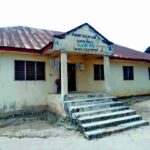
For millions of Nigerians living in rural communities, the Primary Healthcare Centre (PHC) is supposed to be the first and most accessible point of care — the place where a pregnant woman can safely deliver a baby, where a sick child can receive urgent attention and where emergencies can be stabilised before referral.
But a new assessment suggests that in many communities, the facility closest to home may itself be struggling to provide even the most basic services.
Across 16 states, 97 per cent of 1,480 PHCs assessed failed to meet Nigeria’s national minimum staffing standard, leaving only three per cent of the facilities compliant with the requirement.
The finding, contained in the PHC Operational Capability Report by Orodata Science, paints a troubling picture of primary healthcare facilities grappling simultaneously with shortages of health workers, poor infrastructure, inadequate equipment, unreliable electricity, unsafe water and limited access for persons with disabilities.
The assessment covered 1,480 PHCs in 277 Local Government Areas across Nigeria’s six geopolitical zones between October 2023 and June 2025.
Using the CheckMyPHC Digital Scorecard, assessors examined the facilities against indicators covering staffing, infrastructure, equipment, electricity, water supply and accessibility.
The staffing figures are particularly striking.
Eleven of the 16 states assessed had no PHC that met the national minimum staffing requirement at all.
For communities that depend almost entirely on public primary healthcare, the implication goes beyond numbers on a scorecard.
A facility without enough nurses, midwives, community health officers or other essential personnel may have a building, but its ability to provide continuous and safe care remains severely constrained.
And the problem is concentrated where access to alternatives may already be limited.
About 75 per cent of the facilities assessed were located in rural communities, according to the report.
In such communities, a poorly staffed PHC can mean longer journeys to secondary facilities, delays in receiving treatment and increased risks for patients requiring immediate attention.
A Facility May Have Four Walls, But Can It Function?
The assessment found that the crisis extends beyond human resources.
Four out of every 10 PHCs assessed had broken ceilings or leaking roofs, while 38 per cent operated without electricity.
Another 39 per cent relied on unsafe water sources.
These are not merely cosmetic defects.
For a health facility, electricity is needed to support basic operations, including lighting, refrigeration and the use of medical equipment. Safe water is equally fundamental to hygiene, infection prevention and patient care.
When these essentials are missing, the ability of a PHC to provide safe and reliable services is compromised.
The report noted that the deficiencies rarely occurred in isolation.
Instead, facilities often faced several problems at the same time — poor infrastructure combined with inadequate staffing, unreliable power, unsafe water, limited equipment and accessibility barriers.
Orodata said the cumulative effect of these weaknesses increases risks for patients while placing additional pressure on the health workers available to provide care.
Newborns Facing a Preventable Risk
Perhaps the most disturbing findings relate to maternal and newborn healthcare.
The assessment revealed that 75 per cent of the PHCs lacked essential neonatal resuscitation equipment.
Such equipment is critical when a newborn experiences breathing difficulties or other complications immediately after birth.
For a mother who reaches a PHC expecting professional assistance during childbirth, the absence of basic emergency equipment can turn a facility designed to protect life into a place where health workers have limited options during a crisis.
The finding also raises questions about the preparedness of PHCs that provide delivery services, particularly in rural communities where referral to a better-equipped hospital may involve considerable distance and delay.
Orodata therefore called for authorities to ensure that PHCs providing delivery services have the essential equipment required for neonatal resuscitation.
Exclusion Built Into the Healthcare System
Another major gap identified by the assessment concerns people living with disabilities and mobility challenges.
The report found that 66 per cent of the assessed facilities lacked accessibility provisions.
This means that even where healthcare is physically available, some patients may encounter barriers simply trying to enter, navigate or use the facility.
The figure, Orodata suggested, demonstrates that strengthening primary healthcare must also involve making facilities inclusive and accessible to everyone.
Gombe recorded a particularly high accessibility deficit, with 80 per cent of assessed PHCs lacking the required provisions.
Communities Are Losing Confidence
The condition of PHCs is also reflected in how communities perceive the services they receive.
The assessment found that 51 per cent of surveyed community members rated services at their local PHCs as poor.
That finding is significant because the success of primary healthcare depends not only on whether facilities exist, but whether people trust them enough to use them.
When communities repeatedly encounter absent health workers, broken infrastructure, inadequate equipment or unreliable services, they may seek alternatives — or delay seeking care altogether.
The result can be a widening gap between the existence of a healthcare facility and its actual usefulness to the people it is intended to serve.
States Face Different Versions of the Same Crisis
Although the national figures reveal a broad systemic problem, the assessment found considerable differences among states.
Kano and Sokoto were identified as facing particularly serious challenges involving unsafe water, inadequate electricity and shortages of essential newborn-care equipment.
The variations suggest that a uniform response may not adequately address the problems.
A PHC requiring a roof repair does not necessarily need the same intervention as another facility lacking health workers, water, electricity and emergency equipment.
For this reason, Orodata argued that investment decisions should be tied to verified facility-level needs rather than broad assumptions about what PHCs require.
From Renovation to Real Reform
The report warned against treating primary healthcare challenges as isolated infrastructure problems.
Renovating a PHC may improve its appearance, but a newly painted building without health workers, electricity, water or essential medical equipment will still struggle to deliver quality healthcare.
Orodata recommended that state governments develop detailed intervention plans identifying each affected facility, the specific problems requiring attention, the institutions responsible, the resources required and timelines for implementation.
It also called for measurable targets, regular monitoring and evaluation, accessibility-compliant renovations and the inclusion of community feedback in monitoring processes.
On infrastructure, the organisation recommended urgent repairs to damaged roofs and ceilings, provision of safe water and improved electricity.
For facilities without dependable grid power, it recommended solar or hybrid energy systems.
On human resources, Orodata urged the National Primary Health Care Development Agency (NPHCDA) and state PHC agencies to tackle shortages through recruitment, effective deployment and retention of health workers, particularly in underserved communities.
Data Before Spending
One of the most important messages emerging from the assessment is that Nigeria may not lack ideas about how to improve primary healthcare; it may lack sufficiently targeted implementation.
The assessment was based on physical facility visits, direct observation, interviews with health workers and community members, photographs, GPS coordinates and facility records.
The CheckMyPHC Digital Scorecard was developed with reference to NPHCDA minimum standards and relevant inclusion requirements.
Orodata said the exercise was intended to provide more than a catalogue of deficiencies.
It was designed to generate facility-level evidence that governments and development partners can use to determine where resources are needed, what should be fixed first and whether interventions are producing results.
That approach could help shift the conversation from how much money is being spent on primary healthcare to what that money is actually changing on the ground.
Ultimately, the test of Nigeria’s primary healthcare investments will not be the number of facilities renovated, projects commissioned or funds released.
It will be much more basic — and much more consequential.
When a pregnant woman arrives at her nearest PHC, is there a qualified health worker to attend to her?
When a newborn struggles to breathe, is the equipment available?
When the power fails, can essential services continue?
Is there clean water?
Can a person using a wheelchair enter and navigate the facility?
And when communities need care, do they trust the facility enough to come?
The Orodata assessment suggests that for too many Nigerians, the answer to several of these questions remains no.
Until those gaps are addressed together, the existence of a PHC in a community may offer proximity to healthcare without necessarily guaranteeing access to safe, functional and dependable care.