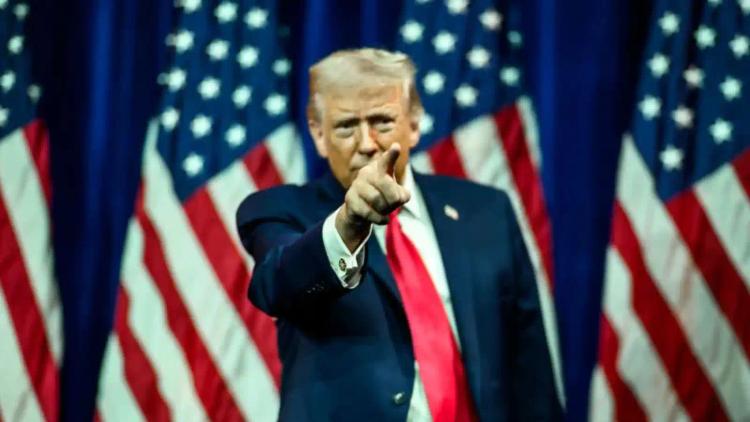
In a move that has stunned diplomats and unsettled international observers, United States President Donald Trump has once again redrawn the boundaries of global politics—this time by declaring himself the “Acting President of Venezuela.”
The declaration, made via Trump’s Truth Social platform, has ignited fierce debate over sovereignty, international law, and the expanding reach of U.S. power. Though lacking any recognised legal basis, the statement has amplified tensions already running high following recent American actions in the oil-rich South American nation.Only days earlier, President Trump signed an Executive Order proclaiming a national emergency over Venezuelan oil revenues held in U.S. Treasury accounts.The
White House framed the decision as a strategic necessity, arguing that it protects U.S. foreign policy interests and national security objectives.Under the directive, Venezuelan oil revenues and proceeds from diluent sales deposited in U.S. custody are shielded from attachment, judicial seizure, or legal claims.
The funds classified as “Foreign Government Deposit Funds” are effectively frozen, with all transfers or transactions prohibited unless explicitly authorised by Washington. While the order affirms that the assets remain the sovereign property of Venezuela, critics say U.S. control over the funds underscores a deeper geopolitical struggle over energy and influence.As political tensions escalate, the security situation in Venezuela remains fragile.
The U.S. Embassy has renewed warnings advising American citizens not to travel to the country and urging those already there to leave immediately. The alert, issued on January 10, 2026, echoes advisories dating back to 2019, when the United States withdrew diplomatic personnel from Caracas and suspended consular services.International outrage has intensified following reports that U.S. forces recently carried out an operation in Venezuela that led to the capture of President Nicolás Maduro and his wife over alleged involvement in drug trafficking and terrorism.The
The development sent shockwaves across the international community and drew swift condemnation from several world leaders.South African President Cyril Ramaphosa described the action as a violation of Venezuela’s sovereignty, while the United Nations warned that such unilateral moves could undermine global security and weaken the international order.
As reactions continue to unfold, President Trump’s declaration and the accompanying economic and security measures have raised fundamental questions about international law, executive power, and the future of U.S.–Latin America relations in an increasingly polarised world.