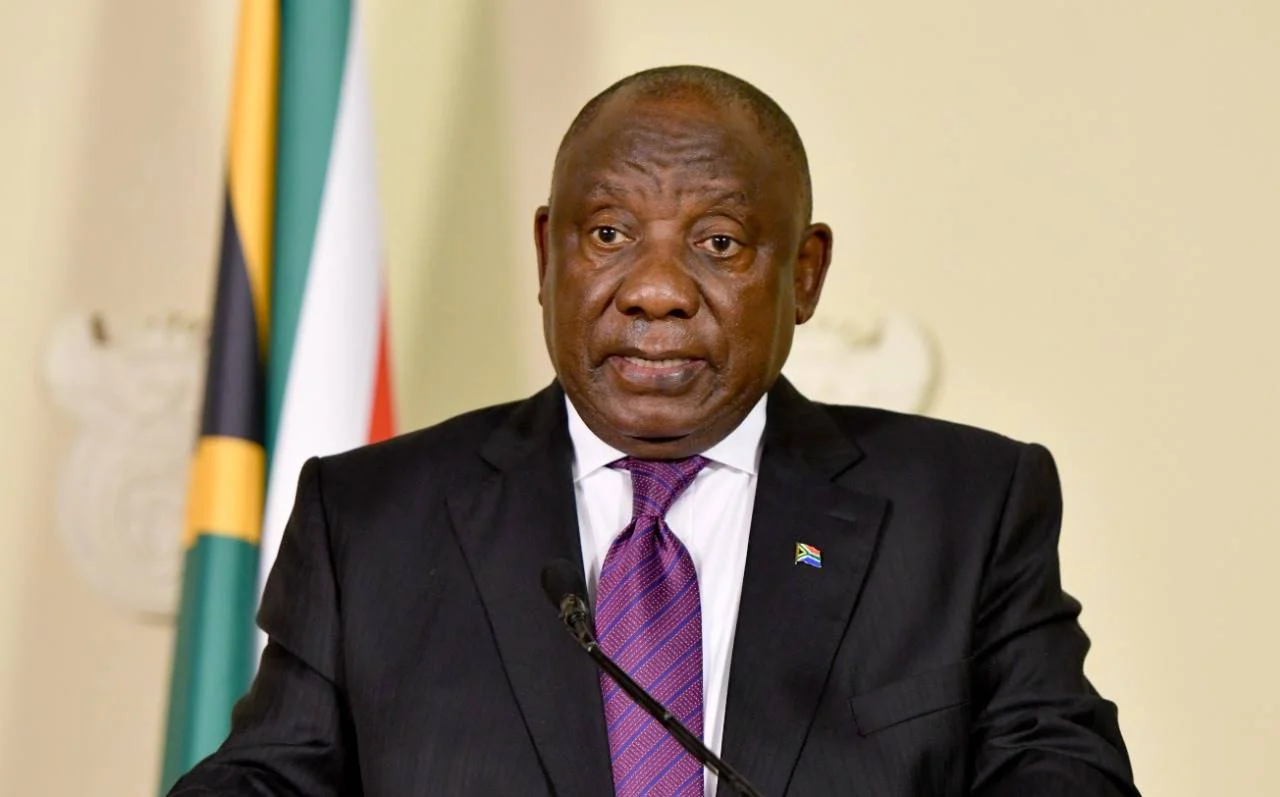
On Monday night, President Cyril Ramaphosa announced new emergency measures to deal with South Africa’s electricity crisis.
In an address akin to his “family meetings” during the pandemic, Ramaphosa likened the crisis to the battle against Covid-19, and urged South Africans to do their bit by installing solar power, avoiding illegal connections and using electricity sparingly.
But he said that South Africans were understandably fed-up after more than a decade without a reliable energy, and promised that the new measures would “fundamentally transform” the electricity sector.Play Video
WATCH | 100MW licensing threshold to be scrapped, Ramaphosa announces
President Cyril Ramaphosa, in an address to the nation on Monday, said that the licensing threshold of 100MW will be removed completely. He outlined emergency measures to deal with the country’s electricity crisis during his speech.
The measures include:
- A complete scrapping of licensing requirements for private energy projects that feed into the electricity grid. Until August 2021, all energy generation facilities of more than 1MW required a licence. Then, the cap was lifted to 100MW – which led to more than 80 private sector electricity projects with a combined planned capacity of over 6 000MW.
Following the success of this reform, government will now remove the licensing threshold completely, Ramaphosa announced. Projects still need to be registered with the National Energy Regulator of South Africa (Nersa), though.
- Over the next three months, Eskom will start to buy electricity from existing independent power producers. “These are power plants which built more capacity than was required and can now supply this excess power to Eskom,” Ramaphosa said.
Eskom will also start to buy power from existing private generators such as mines, paper mills, shopping centres and other private entities that have surplus power.
- Eskom will import power from Botswana and Zambia, which have more electricity capacity than they require, Ramaphosa said.
- Government departments will now take a “pragmatic approach” to the requirements to use locally manufactured inputs for green energy projects.
Locally constructed parts for solar panels, when available, cost between 18% and 30% more, a recent study found. This is threatening the financial viability of new power projects.
The Department of Trade, Industry and Competition, together with the Independent Power Producers Office, will provide further details about these relaxed requirements in coming days, Ramaphosa said.
- The amount of new generation capacity procured through Bid Window 6 for wind and solar power will be doubled from 2 600 MW to 5 200 MW. Further bid windows will be released “on an expedited basis”.
A government request for proposals for battery storage will be released in September, and a further request for gas power as soon as possible thereafter, Ramaphosa said.
- Special legislation will be tabled in Parliament soon to address the legal and regulatory obstacles to new generation capacity “for a limited period”. Ramaphosa says it currently takes almost 1 000 days to get a project from design to operation due to all the necessary regulatory approvals and red tape.
“We are also establishing a single point of entry for all energy project applications, to ensure coordination of approval processes across government,” Ramaphosa said. “Those who applied shouldn’t move from the one department to the next, and face months and months of delays.”
In the meantime, certain regulatory requirements will be waived or streamlined – including the regulatory requirements for solar projects in areas of low and medium environmental sensitivity.
It also means Eskom can expand power lines and substations without needing to get environmental authorisation in areas of low and medium sensitivity and within the strategic electricity corridors.
- Eskom has been given the go-ahead to increase its budget over the next 12 months for critical maintenance. This is despite a debt burden of almost R400 billion. Ramaphosa said that National Treasury is working on a proposal to deal with Eskom’s debt, and this will be announced at the medium-term budget later this year.
Government will also cut red tape that has made it difficult for Eskom to buy maintenance spares and equipment within the required period to effect repairs.
- Businesses and households will be encouraged to install rooftop solar and to connect this to grid.
To incentivise greater uptake of rooftop solar, Eskom will develop rules and a pricing structure – known as a feed-in tariff – for all commercial and residential installations on its network. This means that those who can and have installed solar panels in their homes or businesses will be able to sell surplus power they don’t need to Eskom.
- Eskom will be constructing its first solar and battery storage projects at Komati, Majuba, Lethabo and several other power stations. These will result in over 500MW being added to the system. Eskom will also use interim power solutions, such as mobile generators, to supplement current generation capacity for a limited period.
- A National Energy Crisis Committee, which is chaired by the director-general in the Presidency Phindile Baleni, has been established and brings together all the departments and entities involved in the provision of electricity. Ramaphosa said the ministers on the committee will report to him directly on a regular basis.
Ramaphosa also said that the South African Police Service has set up a special law enforcement team to help Eskom in confronting crime and corruption.
Ramaphosa’s interventions are almost exactly in line with what the private sector and Eskom itself have proposed in recent months.
Despite the reservations of his Mineral Resources and Energy Minister, Gwede Mantashe – who last week questioned the skills of Eskom CEO André de Ruyter – Ramaphosa expressed confidence in Eskom management.
“After years of state capture and mismanagement, a capable and effective management team is working hard to turn the utility around and reverse years of decay,” Ramaphosa said.
“Eskom is too big to fail. It is a national asset. But it will co-exist with private players.”